
Review Date: 2026-06-21
Release Date: 2023-12-07
Developer, Publisher: Owlcat Games, Owlcat Games
Verdict: Exceedingly Positive
Disclaimer: This review was written on 2026-06-21 and reviews the state of the game, and its history, up to that point in time. This review also touches on the "Void Shadows" DLC, but no other DLC, as they were not owned at time of review. Any additional patches, updates, and DLC delivered since that time are not included in the scope of this review.
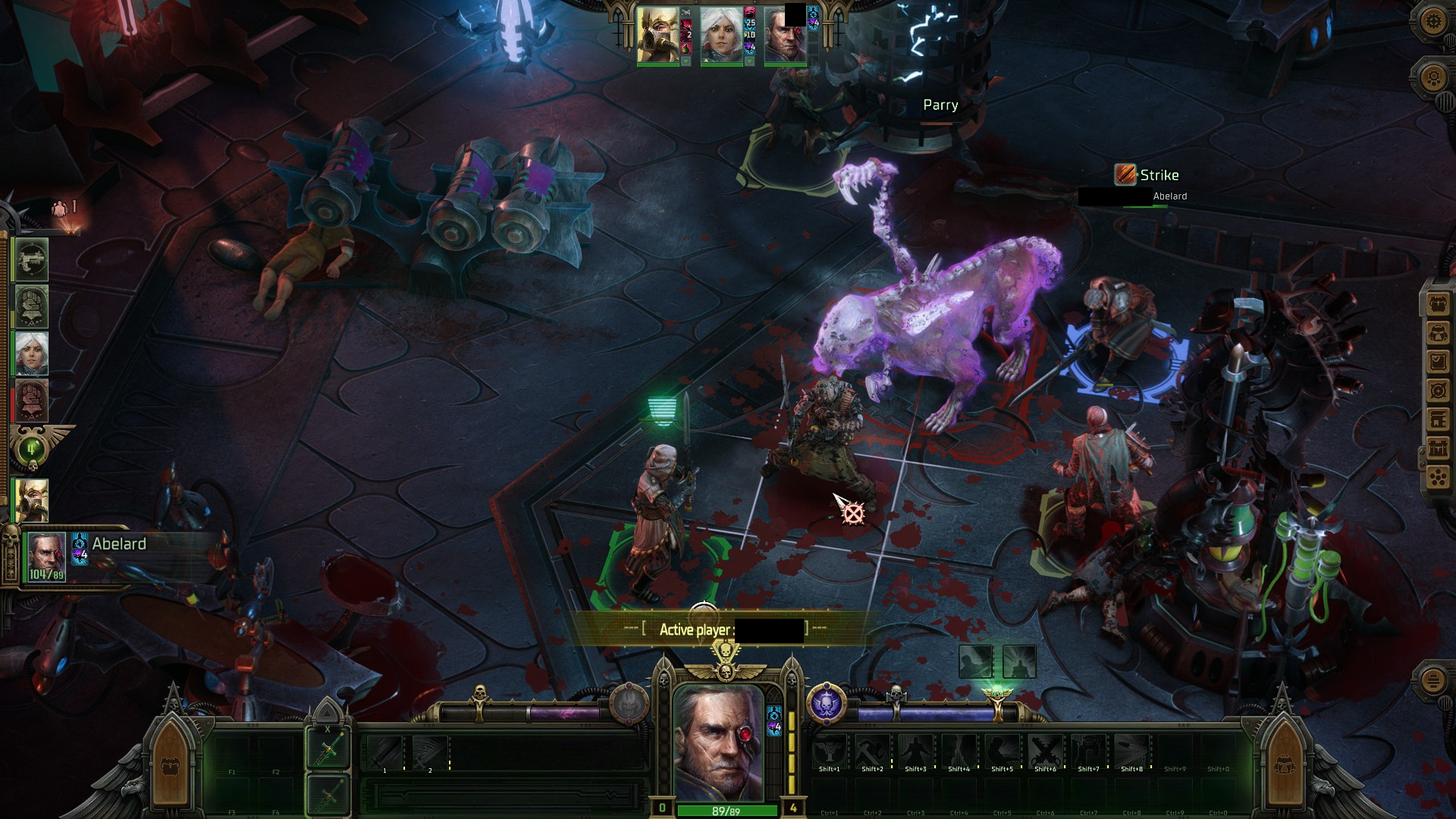
Warhammer 40,000: Rogue Trader really brings players back to what the core of a good cRPG is - excellent combat, deep lore, interesting characters, and choices that matter. While it is not without its flaws, particulary surrounding encounter design, Rogue Trader excels at immersing the player in this world, and offers over 100 hours of gameplay.
This is my first Warhammer 40k game, and the first time I really delved into the lore of the Warhammer 40k universe. I'd previously seen some brief lore videos on YouTube, and have been aware of the universe, but never really dipped my toes in until Rogue Trader.
Coming in knowing the very broad strokes, but otherwise blind, the game does a fantastic job at immersing the player in the lore, even if they are new to the universe. This is also done in such a way that the player does not feel like they are being hand-held into the lore/setting, and respects the player's time and comprehension.
Part of what I think allowed Owlcat to succed at this, outside of their rhetorical and literary skills, is that the game is set outside of the realm of the Imperium of Man, thus avoiding most of the strict rules and confining gameplay that may accompanty that, and instead places the players in the Koronus Expanse, a place beyond full Imperial control, and in the shoes of a rogue trader, a role with near infinite power granted from its inherited Warrants, originally directly issued by the Emporer himself.
As a result, the game takes place in a much more gray area of the Warhammer 40k universe, and lets the player get away with a lot more that just simply would not fly in the Imperium of Man. This allows players, especially those new to the lore, to experience the universe in a way that doesn't feel overly restricted/confined. There are dialogue choices, decisions to be made, and special options to be had for all three major alignments (dogmatic, heretical, iconoclast), as well as gray-area choices even between those.
Decisions also matter, and that includes your alignment. Someone playing a heretic, or even an inconoclast, will find a very different game than someone playing a dogmatic character. Even choices such as the allies you choose to bring along will have an impact on lore and gameplay. This game really makes reference to your decisions in meaningful ways, having varying degrees of impact on the primary story, which was a refreshing change of pace to other games that give the illusion of your choices mattering.
Also unlike other games, given the lore background of your character, your actions through your character don't feel like a self-insert Mary-Sue without justification. Your character, while flawed, in a flawed world, really does wield tremenoudous power as granted by the Warrant, but at the same time, you face real challenges to your power throughout the game.
The game looks nice enough, and while the camera isn't as nice as other cRPGs (e.g. Baldur's Gate 3), and really struggles on occasion, the graphics and presentation are generally immersive.
A few oddities though, were the very sparse voice acting and the clearly lower-budget cutscenes. Much of the introduction to the game was voice acted, but after that, only shorter select parts of the game were voice acted, and cutscenes clearly used most of the default combat animations in very rigid/jank ways, that you would expect to see from a lower budget game. It doesn't ruin the gameplay experience or immersion to greatly, but can feel a little jarring at times.
In the same line as the uniqueness of each campaign from a story and decision perspective, the player has decisions to make outside of lore as well, such as the large customization options for your chracters. There are a variety of classes, abilities, skills, and more to choose from, as you work your way through the level-up system, each of which allows you to craft a character that plays how you are most interested.
At some point, the choices can be somewwhat overwhelming, and level-ups take a lot of time, as you read through dozens and dozens of choices, per character, each level, but ultimately I think the system works well for the game.
That said, and as we we will discuss later, some of these choices can be heavily punished in certain combat encounters, on the harder difficulties.
Before we delve further into the other core parts of the gameplay, I think it is important to comment on multiplayer within Rogue Trader. My playthrough of Rogue Trader was entirely co-op with another player, and while we had a blast, there were certainly a handful of shortcomings in regards to the multiplayer experience.
Multiplayer, as far as I can tell, is not through Steamworks nor direct P2P, and does not support LAN. Instead, the game relies upon Owlcat's servers, which already introduces a concern about loss of the entire multiplayer capability once the servers inevitably go down in the future.
Players choose a region, must have the same game version, and then create a lobby, which you can invite your friends to.
Upon loading into the game, the "host" really runs the show: the host chooses who gets to play as which characters, the host is the only person that can make dialogue choices, the host is the only one that can chose to move between areas/maps, the host is occasionally the only moveable character, space combat contains only the main ship, etc.
Furthermore, the host is the only one that creates the Lord Captain. Custom characters are available from essentially the start of the game, under the guise of mercenaries, but the host too must create these on behalf of the "guest", who has to verbally tell the host what options they want selected from the character creation menu.
We also faced server issues (desyncs, dropped servers, etc.), generally at least once a game session.
That said, aside from these shortcomings, multiplayer was still a welcome and fairly easy-to-set-up way to experience the game with another person. Just be prepared to feel a little guilty during some sections of the game, when other players have nothing to do but watch you click options or play the game.
The game is segmented into several core chapters, each of which introduces something fresh, though can feel a little like whiplash at times. The bulk of the game is split up into several connected gameplay components: space travel, House/Colony management, story-driven dialogue and ability checks, world exploration, loot management, character-building, combat, and space combat.
For a bulk of the game, you will be charting routes between solar systems and engaging in lore to be found on planets and ships throughout the Expanse. There are plenty of side quests, and little elements here and there, as you generally go along a path set by the major story strokes, all while flexing your decision making skills as the Lord Captain of House von Valancius.
This creates the general gameplay loop, which is generally thoroughly enjoyable, but space travel does become a little tedious towards the end of the game, when you realize you've ineffeciently charted your routes between systems, and have to encounter the perils of the warp with the same combat scenario over and over again while you hop between systems.
While traveling, and making decisions, you perform trading with your preferred partners, such as the Imperial Navy, offboarding your loot for further reputational power, and you manage and build your colonies, select colonial projects, and execute contracts.
While on planets (and occasionally in space), you can explore on-foot with your chosen party. I think the game suffers a little bit here, partially due to the locked overhead camera and the small map sizes. You make your way across areas on planets, encountering NPCs, skill-checks, and more.
One nice QoL is that as long as you have all of your characters selected, skill checks will be performed by the person with the highest chance of success (including in dialogue). This also drills in the team-crafting aspect of the game. Having a team full of the same skills will have you missing out on options, and encourages players to explore other character types and character builds, within their party, to succeed in more checks.
Of course, aside from dialogue with NPCs, the other major component of the game while on-foot is combat.
While it might seem overwhelming at first, with all the various systems and abilities, the turn-based combat in Rogue Trader is simple enough to get into and fairly intuitive, especially if you have played other cRPGs before. You may have to perform a chunk of reading to understand certain things at first, but you will get the hang of it after a while, and that also helps you better understand how you want to craft your characters and allies.
Generally, combat is heavily enjoyable, and is made even more enjoyable as you watch your characters grow in strength and abilities, and your strategies line up for success. It felt like a good mix of XCOM and Baldur's/DoS, while still being its own thing. The warp mechanics and momentum mechanics add enjoyable risk vs reward to combat, and combat overall feels great.
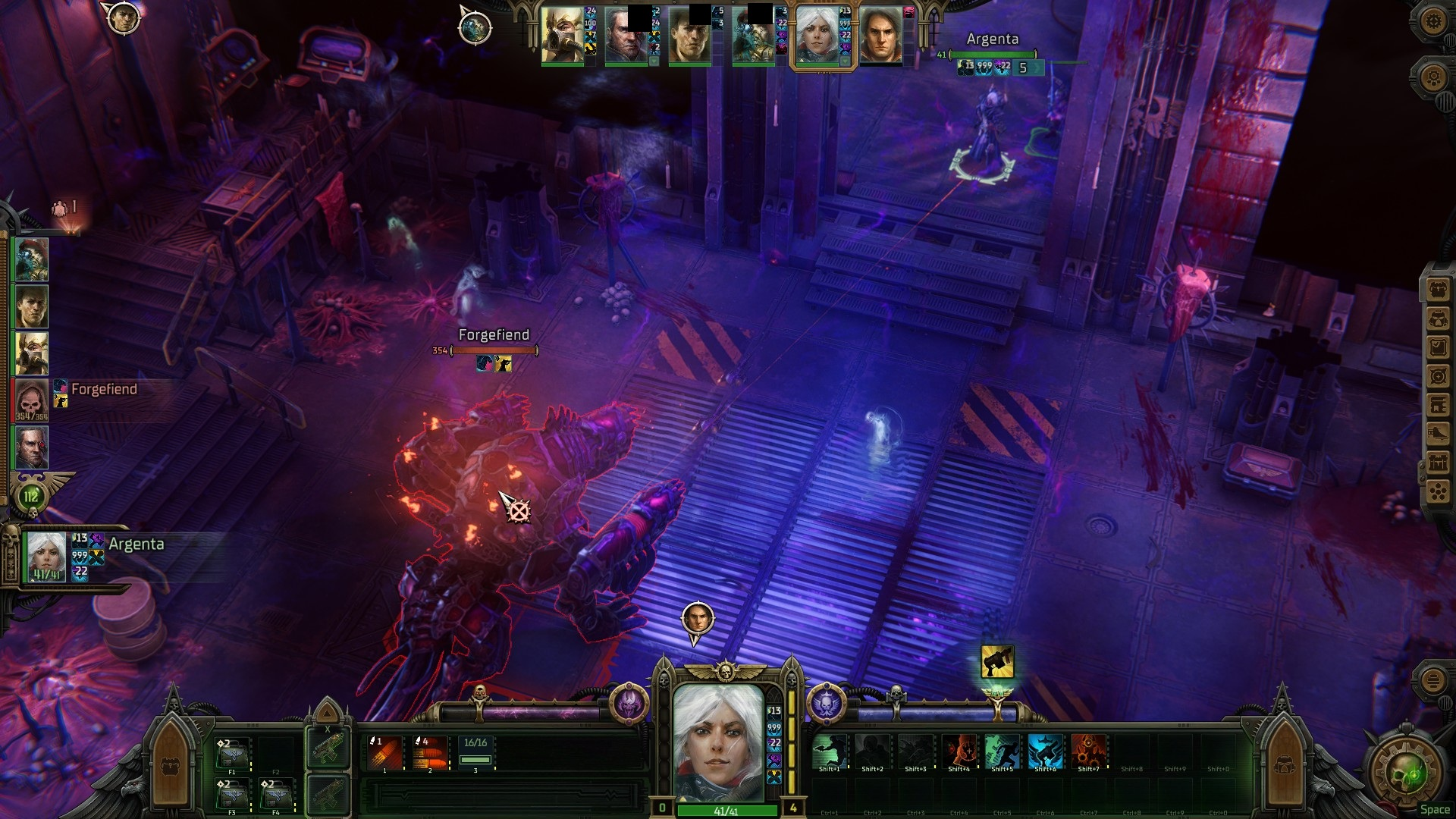
However, combat is also where the game shows some of its weaknesses. There are many encounters that are just flat-out not winnable on the higher difficulty levels unless you have a specifically crafted and optimized team.
We completed this game on the "Hard" difficulty, which is the second highest setting (Story -> Normal -> Daring -> Hard -> Unfair), and in several instances we had to resort to cheese strats surrounding starting combat far away or running away during combat and evading enemies, while characters gained per-turn buffs from selected abilities or skills, before engaging in combat.
While this was occasionally fun to trial and error, and make it through really sticky situations, there were two combats where we flat out simply did not have the characters optimized in a way to complete the encounter. In these two combats (and players of the game can probably guess which two), the first phases of each of them we had to lower the difficulty, before returning the difficulty for the second phase of the fight. In the first example, 3+ of our characters would be wiped before they even got a single turn, in a small arena where neither running away nor adequate positioning were possible. Even with constant reloading (which then started to take forever to do, especially in multiplayer, towards the end of the game), it was nearly impossible to get decent iniative without simply being wiped out.
These combats could be theoretically possible with perfectly optimized builds and great RNG and iniative rolls, but even with a well put together team and arguably decent strategizing, we struggled, because we had the characters and builds we wanted, but not that the game wanted.
Furthermore, many of the "difficult combats" simply use the crutch of "this enemy has an ability that lets it and all of its friends go multiple times each turn", though some of the boss fights and major combats didn't use this overplayed gimmick, and instead had more enjoyable mechanics, that I wish we saw more of.
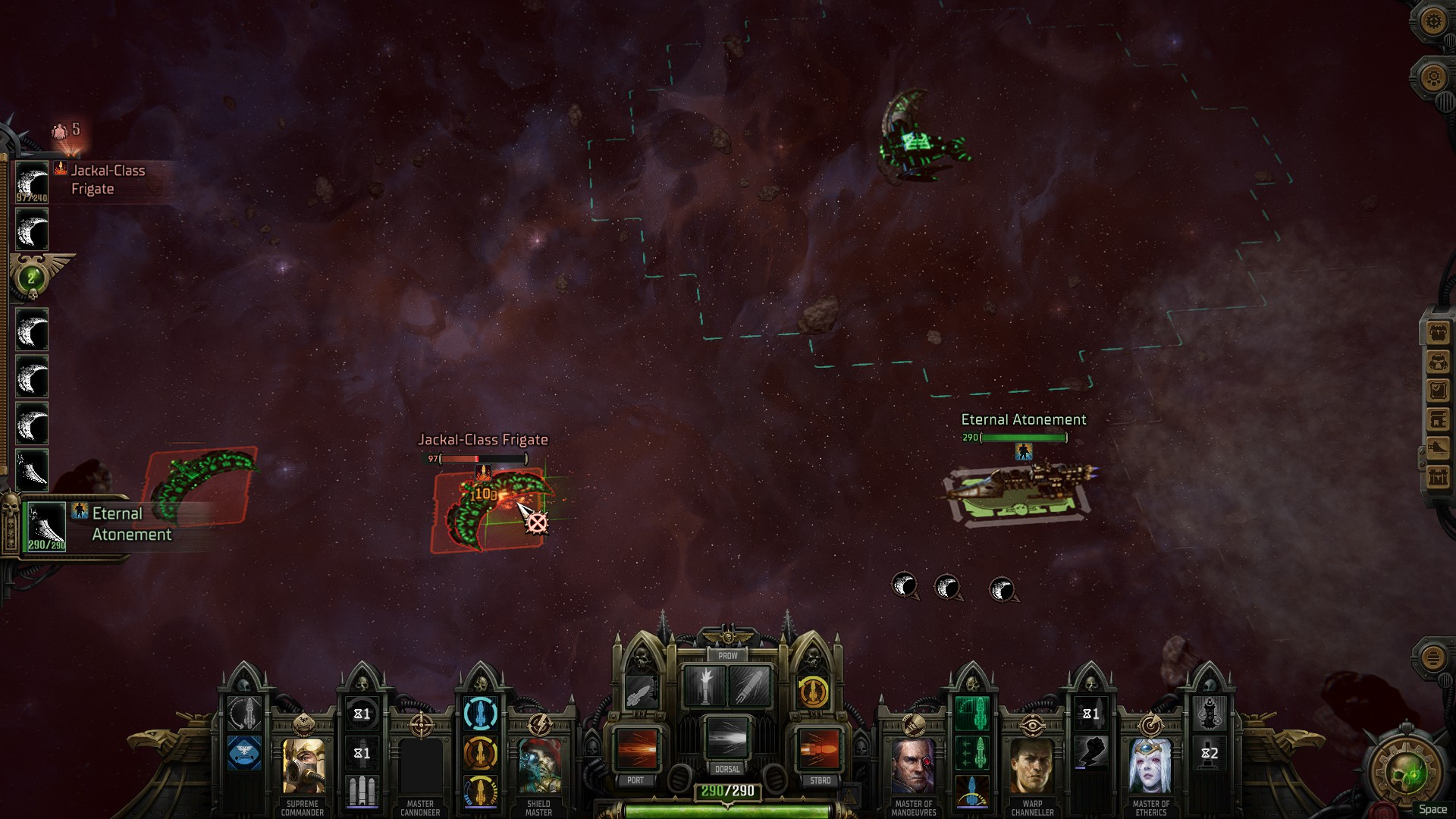
Space combat, wherein you control your flagship, with its own unique naval combat mechanics, was also a mixed bag. At least on harder difficulties, some combats were extremely difficult or extremely boring. It also just generally missed the mark when it came to multiplayer, as you only ever control a single ship (along with your torpedos and torpedo-tube-launched interceptors). While guests can click abilities and move your flagship, unless you want to "share the controller" (i.e. you move, and I press abiltiies), space combat is really a single-player endeavor, aside from co-strategizing.
Not all of space combat was bad though. I do appreciate its existence, and did have some fun encounters where strategizing was particularly rewarding, I just think it really needed to be worked in differently.
Overall, Warhammer 40,000: Rogue Trader was an amazing game. While it is a lower budget game compared to Triple A funded titles, and suffers from a few bugs here and there (though nothing game-breaking), and some poor encounter design choices on occasion (actually game-breaking on harder difficulties), it offers so many hours of fun, strategy, and emotions. It is very clearly a labor of love, and the developer's care for the universe and their game really shines through. It really exemplifies what it means to be a game. It knows what is fun, it knows what players want, and it (mostly) gives players the ability to play the game in a way that is fun to them, with loads of customization potential, choices, and actually impactful decisions to make.
I thorougly enjoyed my time with the title, and I am extremely excited for the next Warhammer 40k cRPG title from Owlcat - Warhammer 40,000: Dark Heresy.
© 2026 MidwestDad96. All rights reserved.